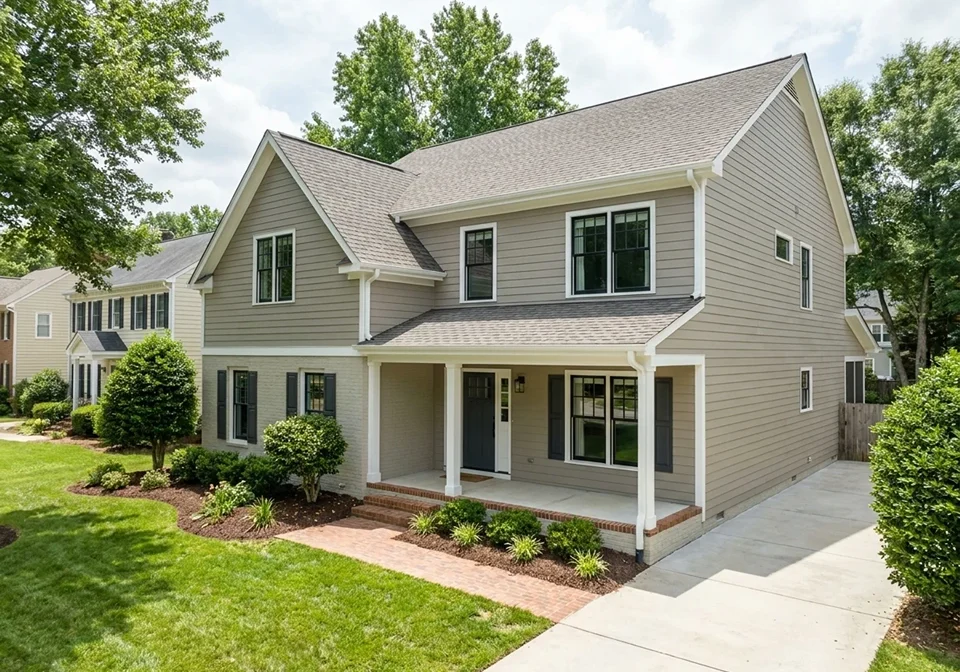
When most homeowners think about an exterior painting project, they picture the end result… the Chip and Joanna Gaines “pull back the curtain” moment that reveals a beautifully painted home with crisp lines and fresh color.
What they don’t see is everything that happens before the first coat of paint is ever applied.
We say it all the time, but preparation is honestly the most important part of any exterior paint job. Professional painters often spend as much (or even more) time preparing a home as they do actually painting it. While that may seem excessive, proper preparation is what separates a paint job that lasts 2–3 years from one that looks great for a decade (and isn’t that what every homeowner wants?!).
If you’ve ever wondered how pros prepare your home for exterior painting, here’s a behind-the-scenes look at the complete process and why every step matters.
In This Post
Why Proper Exterior Painting Preparation Matters
Exterior painting is an investment in time and money, so you want to make sure you do everything you can to ensure the finish goes on smoothly, looks great, and is durable enough to last as long as possible.
While choosing a high-quality paint product is a big part of the equation, preparation is just as important (and must be done before a drop of paint touches the home). Even the highest-quality paint can’t perform well if it’s applied over dirt, peeling paint, damaged wood, or loose surfaces. Paint needs a clean, stable surface to properly bond with your home’s exterior.
Without proper preparation, your paint might not adhere properly to your home, leading to early paint failure. Flaking or peeling paint, debris, or damaged and worn down surfaces are all things that must be taken care of before painting.
It might seem crazy how much time pros take to prepare your home for exterior painting, but trust us, it’s worth it! When done right, it’ll save you a lot of time and money in the long run. In the end, preparation is what ensures the end result is beautiful and durable
How Professional Exterior Painters Prepare Your Home for Painting
Every home and project is a little different, but professional painters generally follow the same proven preparation process.
1. Plan Around the Weather
Exterior painting isn’t something that can happen on just any day. The conditions have to be just right.
Professional painters carefully monitor weather conditions before scheduling your project because temperature, humidity, wind, and rain all affect how paint cures.
Ideal painting conditions include:
- Mild temperatures
- Low humidity
- Dry conditions
- No rain in the forecast
- Minimal wind
Painting during poor weather can cause slow drying times, improper curing, or even paint failure. That’s why experienced painting contractors often adjust schedules to work with the weather. Here in Raleigh, mid-late spring and early summer and fall are our most ideal times for exterior painting.
2. Prepare the Work Area
Before any cleaning or painting begins, professionals protect your property and belongings.
This includes moving or covering items like:
- Patio furniture
- Outdoor grills
- Planters
- Decorations
- Garden beds
- Shrubs and landscaping
Protecting your property helps prevent accidental paint splatters while also giving painters safe, unobstructed access to your home’s exterior.
3. Pressure Wash the Exterior
One of the most important preparation steps is thoroughly cleaning the home’s exterior.
Over time, siding collects:
- Dirt
- Dust
- Pollen
- Mold and mildew
- Algae
- Cobwebs
- Chalky paint residue
Pressure washing removes these contaminants so the new paint can properly adhere to the surface.
Just keep in mind, pressure washing can be tricky because too much pressure or the wrong spray angle can damage your siding and force water behind exterior materials. That’s why we recommend leaving this up to the professionals as well, as they know the right pressure settings for different siding materials.
4. Make Necessary Repairs
If your home has any damage to the surface of the exterior, painting alone won’t fix those underlying problems.
Before painting begins, professionals inspect the home for issues such as:
- Rotten wood
- Loose trim
- Missing siding
- Cracks
- Holes
- Water damage
These repairs are completed first so the paint has a solid, stable surface to protect.
If you notice any of these signs, it may mean your home needs more than just exterior painting.
5. Scrape and Sand Loose Paint
Not every home needs extensive scraping, but any peeling or flaking paint must be removed.
Professionals carefully scrape away loose paint and sand rough edges to create a smooth transition between old and new surfaces.
This helps:
- Improve paint adhesion
- Create a smoother appearance
- Prevent future peeling
- Eliminate rough edges that would show through the new paint
The goal isn’t necessarily to remove every layer of old paint, it’s to create a sound surface that allows the new coating to perform properly.
6. Caulk Gaps Around Trim
Small gaps around windows, doors, trim boards, and siding can allow moisture to enter your home. Professional painters inspect these areas and apply high-quality exterior caulk where needed.
Proper caulking helps:
- Seal out water
- Improve energy efficiency
- Prevent insect intrusion
- Create cleaner paint lines
- Give the home a finished appearance
This small step makes a huge difference in both appearance and long-term protection.
7. Mask and Protect Exterior Features
Before priming or painting begins, painters carefully protect anything they don’t want paint to get on.
This often includes:
- Windows
- Doors
- Outdoor lighting
- House numbers
- Mailboxes
- Electrical fixtures
- Rooflines
- Brick or stone accents
Professional masking creates crisp, clean paint lines while protecting the rest of your property from overspray or accidental drips.
8. Prime When Needed
Not every exterior requires a full coat of primer, but many homes benefit from it.
Primer is especially important when:
- Bare wood is exposed
- Repairs have been completed
- Existing paint is heavily weathered
- Stains are present
- The surface is porous
- You’re making a dramatic color change
Primer acts as a bonding layer between your home’s exterior and the finish coat while also helping create a more uniform appearance.
Professional painters know which primers to choose based on your home’s siding material and the paint product being used. This ensures maximum durability.
The Difference Preparation Makes
Many homeowners compare painting estimates based only on price, but preparation is often where contractors differ the most.
A lower estimate may include minimal prep work, while a higher-quality contractor invests the time needed to properly clean, repair, sand, caulk, and protect your home before painting ever begins.
Although preparation takes time, it’s one of the biggest factors in how long your exterior paint will last. A properly prepared surface allows premium paint products to perform exactly as they’re designed to, helping protect your home for years to come.
When you hire experienced professionals, you’re not just paying for paint… you’re investing in the careful preparation that makes the finished result both beautiful and long-lasting.
Frequently Asked Questions About Exterior Painting Preparation
Still have a few questions about how pros prepare your home for exterior painting? You’re not alone! Here are some of the most common questions homeowners have before an exterior painting project begins.
How long does it take to prepare a house for exterior painting?
It depends on the size and condition of your home. A newer exterior in great shape may only need cleaning, light scraping, caulking, and masking, while an older home with peeling paint, damaged wood, or other repairs may need more prep time.
And while it can feel like a lot of work before the “real” painting begins, don’t rush it! Taking the time to properly prepare the surface is one of the best ways to help your new paint look better and last longer.
Do you have to pressure wash a house before painting?
In most cases, yes. Your home’s exterior collects dirt, pollen, mildew, cobwebs, and other buildup over time, and painting directly over all of that can keep the new paint from bonding properly.
Professional painters clean the exterior first so they’re starting with a fresh surface that’s ready for paint.
How long after pressure washing can you paint a house?
The exterior needs to be completely dry before painting begins. The exact timing can vary depending on the weather, humidity, siding material, and how much moisture the surface absorbed.
Here in Raleigh, humidity can definitely play a role, so professional painters will make sure the surface has had enough time to dry instead of rushing into the next step.
Does all old paint need to be removed before repainting?
Nope! In most cases, you don’t need to strip every layer of existing paint from your home.
What does need to come off is any paint that’s peeling, flaking, bubbling, or no longer securely attached to the surface. Those areas are scraped and sanded so the new paint has a smooth, stable surface to adhere to.
Should exterior cracks and gaps be caulked before painting?
Yes, when appropriate. Gaps around windows, doors, trim, and other exterior areas are often caulked before painting to help keep moisture out and create a cleaner finished look.
It’s one of those small prep steps you may never notice once the project is finished… but it can make a big difference in the final result.
Does every exterior painting project need primer?
Not necessarily. If your existing paint is in good condition and you’re repainting with a similar product and color, a full coat of primer may not be needed.
Primer is typically used on bare wood, repaired areas, stains, porous surfaces, heavily weathered paint, or when the project calls for additional adhesion and coverage. A professional painter can determine where primer is needed based on your home’s exterior and the products being used.
Can exterior painting fix rotten wood or damaged siding?
Unfortunately, paint isn’t a magic wand for damaged materials (we wish!).
Rotten wood, loose siding, water damage, and other exterior issues should be repaired before painting begins. Painting over damaged surfaces may temporarily hide the problem, but it won’t solve it—and could lead to bigger issues down the road.
What should homeowners do before professional painters arrive?
Your painting team should handle the heavy lifting when it comes to paint prep, but homeowners can usually help by removing small decorations, moving patio furniture away from the house, securing pets, and making sure painters can easily access the areas being painted.
Not sure what needs to be moved? Just ask! A professional painting company should walk you through what to expect before your project begins.
Why is professional paint preparation worth the extra time?
Because the best-looking paint job in the world won’t stay that way for long if the surface underneath wasn’t properly prepared.
Thorough cleaning, repairs, scraping, sanding, caulking, masking, and priming help your paint adhere properly and create a smoother, more durable finish. In other words, the prep work you don’t really see is a huge part of what makes the finished project look so good.
Trust Oak City Coatings With Your Exterior Painting Project
At Oak City Coatings, we believe a lasting paint job starts long before the first coat of paint is applied. Our team takes the time to properly clean, repair, prepare, and protect your home so your new exterior finish looks incredible and stands up to North Carolina’s weather for many years.
If you’re looking for professional exterior painting in the Raleigh area, we’d love to help.
Contact Oak City Coatings today to schedule your free estimate and see the difference that professional preparation makes.