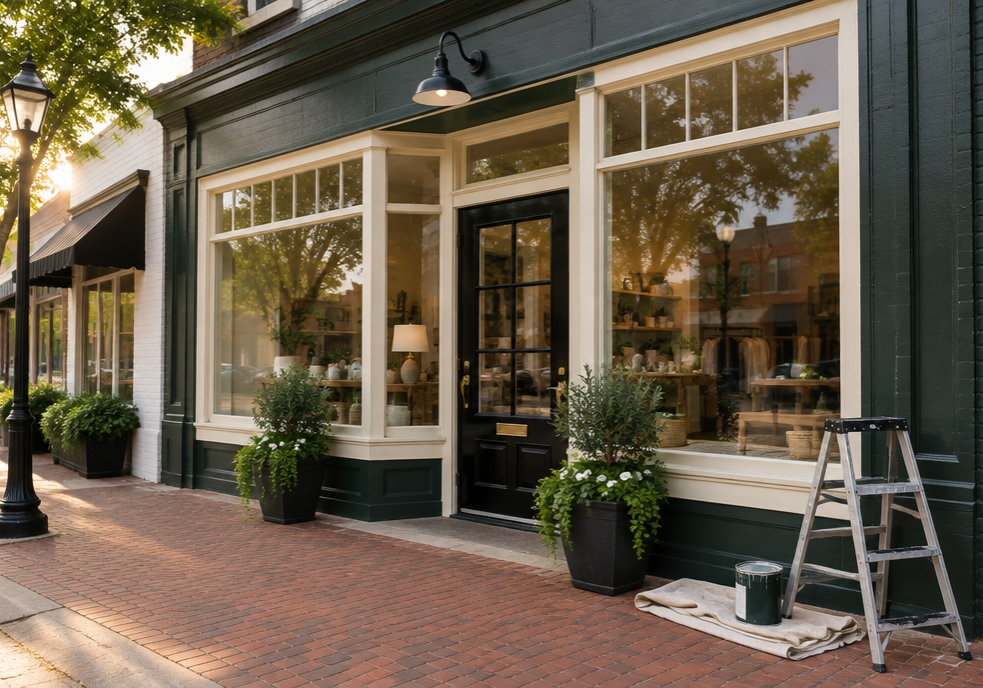
Does your retail storefront need to be repainted, but you’re worried about shutting down your business for days and losing valuable business hours and revenue? We get it! With the right plan and painting team in place, retail storefront painting in Raleigh NC can be scheduled around your store’s hours to minimize disruptions. This can be done with crews working after you close, during a planned day off, or in carefully phased sections.
For an independent retailer, planning is just as important as the paint itself. Your storefront isn’t just the exterior of your building. It’s an important part of your overall marketing, catching the eyes of those who walk, drive, or bike past your shop. Your signage, facade, windows, and front door all contribute to the first impression that determines whether someone keeps walking or decides to come inside.
Here’s what Wake County retail owners should know before scheduling a storefront repaint.
In This Post
Why Your Storefront Is a Key Part of Your Marketing Strategy
For a retail business, your storefront is doing more than protecting the building from the elements. It’s marketing your business every single day.
Someone walking down a main street in downtown Apex, Fuquay-Varina, or Holly Springs may only glance at your storefront for a few seconds. In that short window of time, they’re making quick judgments about what kind of business you are, whether the store looks inviting, and whether it’s worth stopping in.
That’s why a faded, peeling, or inconsistent storefront can really work against you. Even if you have an amazing business and service on the inside, neglected paint on the outside can make a business look closed, dated, or less established than it actually is.
The opposite is also true. A clean, well-maintained facade gives people a reason to look twice and come inside.
For an independent retailer, your storefront can also be one of your strongest brand assets. Your exterior color, trim, doors, awning, and signage all work together to create a recognizable presence. If done right, it’s the type of look where people instantly know who you are just by looking at your building’s exterior. When those colors fade or a previous paint job doesn’t quite match your brand, the difference can be surprisingly noticeable from the sidewalk.
Unlike your competitors’ buildings, your storefront is one piece of the customer experience you completely control.
On a busy Wake County main street where several independent businesses may be competing for the same walk-by attention, that’s really important. This doesn’t mean you need to make your storefront the loudest one on the block. You want it to look intentional, welcoming, and consistent with the experience customers can expect once they walk through the door.
How After-Hours and Overnight Storefront Painting Works
When it comes to retail storefront painting in Raleigh NC, the biggest concern of many store owners is, “How can we get this done without being closed?”
The answer depends on which parts of the storefront you’re painting and how much work is involved, but there are several ways to build a schedule around your regular business hours.
After Close, Before Open
For work inside the retail space, crews can often begin after the last customer leaves and work into the evening.
This can be a good option for areas such as sales-floor walls, hallways, restrooms, or other spaces where customers and employees need normal access during the day.
The tradeoff is that an after-hours project can take more calendar days than a job where the entire space is closed and the painters can work until the job is done. Each shift involves setting up, protecting the space, completing the work, and cleaning up before the store opens again.
That’s why scheduling and communication are so important.
Overnight or Early-Morning Facade Work
Street-facing exterior work can sometimes be scheduled overnight or in the early morning hours, depending on the project and the property’s access requirements.
This keeps customers out of the work zone and eliminates the awkward situation of having ladders, drop cloths, or wet paint directly around your entrance while you’re trying to welcome shoppers.
Exterior work does come with one important limitation: weather. Unlike interior painting, exterior painting can’t simply be moved indoors when conditions aren’t right. Temperature, rain, humidity, and surface conditions all affect the schedule.
Use the Day You’re Already Closed
If your store is already closed one day a week, that day can be perfect for scheduling a paint project.
For some independent retailers, combining a closed Sunday with the evenings before or after it can allow a crew to make significant progress without sacrificing a full day of sales.
The key is to plan the work around the actual scope of the project rather than assuming every storefront can be completed in a single shift.
Phase the Work by Zone
For larger retail spaces, painting can also be divided into manageable sections.
You might tackle back-of-store areas first, then move through portions of the sales floor, with the exterior facade completed separately. The goal is to keep the store functional and shoppable while the work is being completed.
The best schedule is the one that fits the way your business actually operates.
If you’re interested in how this same approach works for other occupied commercial spaces, we have upcoming guides on repainting a salon or spa without disrupting appointments and repainting an independent doctor’s office without closing.
What Happens to Your Signage, Windows, and Displays?
A retail storefront has a few challenges that don’t come up on every commercial painting project.
Your paint crew isn’t working around an empty wall. They’re working around the things that tell customers what your business is and where to enter.
What Happens to Your Signage?
Depending on the type of signage you have and the scope of the project, signs may need to be removed and reinstalled, or carefully masked and protected in place.
Channel letters, blade signs, awnings, and other signage can each require a different approach. If removal and reinstallation are necessary, that needs to be part of the project plan from the beginning rather than treated as an afterthought.
What About the Storefront Windows?
Large display windows are one of the most visible (and valuable!) parts of a retail storefront, which means it’s really important to carefully mask them.
A clean paint line around a large pane of glass may seem like a small detail, but it’s one of those details customers notice when it’s done poorly. Proper preparation and masking help protect the glass while creating a crisp transition between the painted facade and your display area.
What Happens to Displays and Inventory?
During the initial walkthrough, you’ll want to determine what needs to be moved and what can safely remain in place.
Some fixtures can simply be moved away from the walls. Others may need to be protected and carefully covered.
Open shelving full of inventory is usually where this becomes especially important. Your painting contractor should understand what needs to move before the crew arrives so you’re not scrambling to relocate products at closing time.
Don’t Forget the Front Door
Your entry door gets touched, opened, pushed, pulled, and cleaned more than probably any other painted surface in the building.
If it’s being painted, the finish needs adequate time to dry and cure so customers aren’t walking through wet paint or sticking their hands on a freshly painted surface the next morning.
The same goes for thresholds and other areas immediately around the entrance.
Plan for After-Hours Access
One of the most overlooked, yet important, logistical parts of a painting project is deciding who is letting the paint crew in.
Keys, alarm codes, building access, security systems, and closing procedures should all be discussed ahead of time. A simple access question can become a major scheduling problem if nobody has the information when the crew arrives after hours. The last thing you want is a paint crew that’s ready to work standing around locked out of the building.
Choose Finishes That Can Handle a Retail Store
Retail spaces with heavy traffic put paint through plenty of wear and tear.
Customers brush against walls. Shopping bags bump into corners. Strollers roll through entrances. Employees move displays and restock shelves. And the areas around checkout counters and doorways tend to get touched and cleaned frequently.
Here’s how to choose finishes that can stand up to the traffic these surfaces face.
Interior High-Traffic Surfaces
For high-traffic areas, durability and cleanability should be a big part of the finish decision, not just the color.
A more durable, scrubbable finish can make sense around entrances, checkout areas, and other high-touch locations. Learn more about choosing the best paint finish for high-traffic areas.
It’s also worth understanding what can happen when the wrong sheen is used in a high-touch area. Repeated wiping and rubbing can cause paint burnishing, leaving certain areas looking shinier than the surrounding wall even though the paint hasn’t technically failed.
Once your new paint is in place, proper cleaning helps preserve the finish. Learn how to clean painted walls safely without removing the paint.
The Street-Facing Facade
Your exterior has an entirely different job than the inside.
The paint needs to stand up to sun, rain, humidity, temperature swings, and the general wear that comes with being exposed to the elements year-round. Plus, it needs to stand out as part of your overall marketing and curb appeal.
Here in the Triangle, UV exposure is high, so planning for that when choosing products is key. South- and west-facing walls can receive particularly strong sun exposure, which can contribute to fading over time.
The right exterior paint and sheen can help your storefront maintain a consistent, finished appearance for longer. Read more about choosing the best exterior paint sheen. You can also learn more about choosing exterior paint that can handle the Raleigh climate.
If Your Storefront Is Brick
If your main-street storefront is brick, you have another great option worth exploring: limewash.
Limewash can create a soft, breathable finish that changes the character of an older brick storefront without giving it the completely opaque appearance of traditional latex paint. It’s also an especially appealing choice for independent retailers looking for a classic, elevated storefront aesthetic.
We take a closer look at how commercial limewash works and where it can make sense in this blog post.
For a brick storefront in a historic-feeling downtown area, this can be a really appealing way to refresh the building while maintaining some of the character that makes the space unique.
When to Schedule Storefront Painting on the Triangle Calendar
When scheduling exterior painting in Raleigh and the surrounding Triangle area, weather isn’t the only consideration.
Painting during pollen season can create additional challenges, while extreme summer heat can affect application and drying conditions.
For a retailer, there’s another calendar to consider: your own busy season.
If your store gets significantly busier during the holidays, for example, you probably don’t want a major facade project happening right as holiday shopping ramps up. Working backward from your busiest sales period can give you a much better window for completing the work.
Interior painting gives you more flexibility because it isn’t subject to the same outdoor weather conditions. If you want to repaint both the interior and exterior, a split approach can make sense: repainting the interior during one season and tackling the exterior facade when the weather is right.
When scheduling your small business storefront painting in NC, think about finding a window of time that works for your business and gives the painting crew the conditions they need to do the job right.
Working With Oak City Coatings
A successful storefront repaint, like any paint project, starts with a good plan.
During the initial walkthrough, we’ll look at the condition of the facade and interior areas, talk through your goals, and work out the practical details, such as:
- When can the work happen?
- What happens to the signage?
- Which displays need to move?
- How will the crew access the space after hours?
Those details are just as much a part of the project as the paint selection and application itself, not something you should have to figure out at the last minute.
Our team provides a single point of contact throughout the project, so you aren’t left coordinating between different crew members or trying to keep track of who’s doing what.
Once the work is complete, we’ll walk through the project with you to make sure everything has been addressed before the job is wrapped up.
Oak City Coatings is a local, family-owned painting company serving Raleigh and communities throughout Wake County, including Cary, Apex, Holly Springs, Fuquay-Varina, Morrisville, and Garner.
We understand that when you’re an independent business owner, your storefront is more than a building. It’s part of the business and brand you’re working hard to build, as well as an integral part of the community.
Ready to Give Your Storefront a Fresh Look?
Repainting your storefront doesn’t have to mean putting a “Closed” sign on the door.
With thoughtful scheduling, proper preparation, and the right approach to your facade, signage, windows, and entryway, you can give your storefront a fresh, professional look while continuing to serve your customers during your normal business hours.
If you’re considering a storefront repaint, Oak City Coatings can help you build a plan around your business. We’ll look at your specific storefront, talk through the timing and logistics, and provide an estimate for the work.